2026 Inductees
2026 Scholars
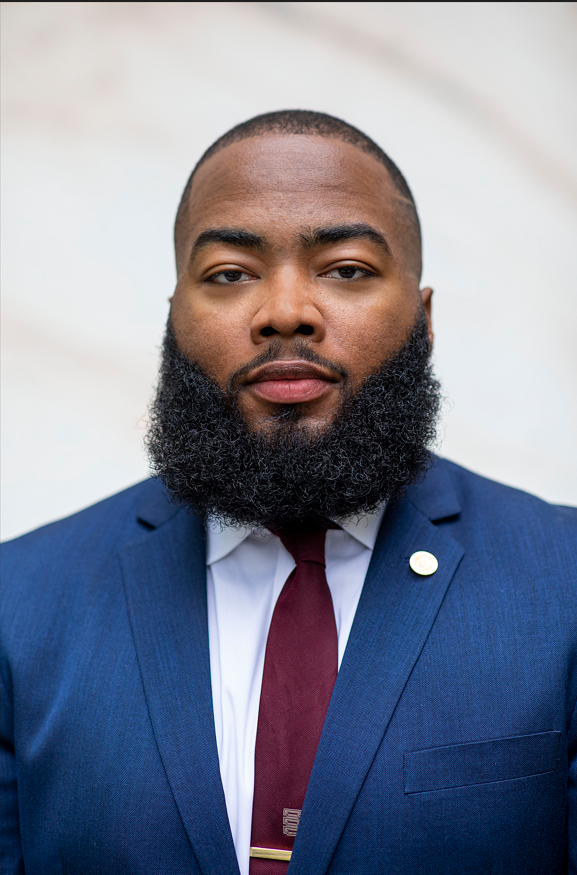
Jared T. Bailey is a third-year Ph.D. candidate in Environmental Health Sciences at Emory University. He is a trainee in the NIEHS Predoctoral T32 Training Program in Environmental Health Sciences and Toxicology. His academic foundation began at Morehouse College (B.S., Biology), followed by a Master of Public Health from Morehouse School of Medicine. His training integrates biology, epidemiological methods, biostatistics, and toxicology to examine environmental determinants of chronic disease.
Jared’s doctoral research centers on the exposome, toxicology, and cancer epidemiology. As a former trainee in the National Institute of Environmental Health Sciences Environment and Cancer Epidemiology Group, he leads research investigating chemical exposures from personal care products in relation to cancer incidence within a large U.S. prospective cohort. His first-author publication, “Use of hair straighteners and chemical relaxers and incidence of non-reproductive cancers,” was recognized as NIEHS “Paper of the Month” and later awarded 2025 Paper of the Year. He employs high-throughput omics and untargeted exposure assessment approaches in the Comprehensive Laboratory for Untargeted Exposome Science to characterize molecular signatures of toxicant exposure and develop rigorous methods for chemical analysis. He also serves as a doctoral trainee at the Chemical Insights Research Institute under Underwriters Laboratories Research Institutes, where he advances consumer product toxicology and women’s health research.
Demonstrating leadership, scholarship, and service, Jared serves on the Board of Directors for Odyssey Atlanta and is an active member of Brothers in Public Health, advancing environmental justice, health equity, and STEM engagement among youth in Atlanta, Georgia.

Juan David Escobar is a candidate for the Interdisciplinary Ph.D. in Hispanic Studies at Emory University. His research focuses on the role of translation in shaping the Latin American literary and intellectual field during the Cold War. Escobar has worked as a community liaison between organizations such as the Alliance Theatre and Hispanic communities in Atlanta through the Mellow Intervention Program. He received a Bachelor of Arts in English and a Master of Arts in Latin American Literature from the National University of Colombia, where he taught from 2012 to 2020. Escobar’s leadership and advocacy are reflected in his sustained involvement with graduate student organizations serving underrepresented populations. He has served as president of the Graduate Association of Spanish and Portuguese, where he co-organized events for the Latinx population, and as treasurer of the Graduate Student Parent Association, an organization dedicated to supporting graduate students who are parents, an often invisible and structurally vulnerable group within PhD education. Ultimately, Escobar aspires to work at the intersection of politics, aesthetics, translation, and public and digital humanities.
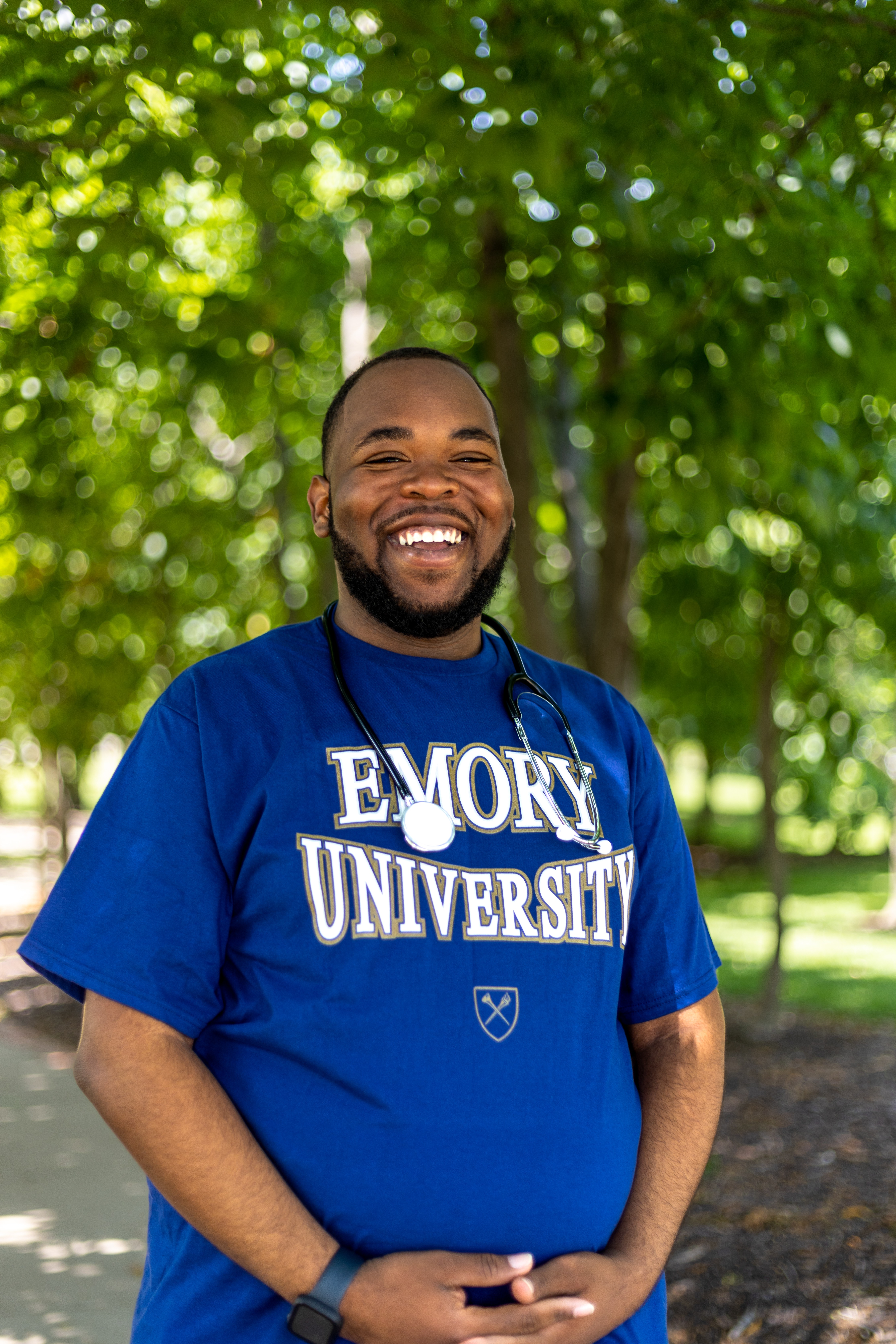
John A. Fuller is a candidate in the Ph.D. program in Nursing at Emory University. His research focuses on understanding the social and structural determinants that impact people living with HIV and cancer. John has been recognized as a recipient of the Centennial Scholars Fellowship, the George W. Woodruff Fellowship, and the 2025 Dr. Kharen L. Fulton Award for Inclusive Excellence in the Laney Graduate School. He is distinguished as an American Psychosocial Oncology Society (APOS) Health Equity Scholar, an Association of Nurses in AIDS Care (ANAC) Diversity, Equity, and Inclusion Fellow, a National Institute of Nursing Research (NINR) Advanced Research Training in Social Determinants of Health Fellow, and a Robert Wood Johnson Foundation (RWJF) Health Policy Research Scholar. He earned a Bachelor of Science in Human Development and Family Science from The Ohio State University, where he was a Health Sciences Scholar, Pelotonia Scholar, and Young Scholar.
John served as president of the PhD Nursing Student Association (PNSA) and as PhD representative for the Emory Black Nursing Student Organization (EBNSO). He has been actively involved with National AIDS Education and Services for Minorities (NAESM), a community-based nonprofit organization focused on HIV prevention among Black LGBTQ+ people in Atlanta and nationally. He completed the Creating Responsible and Intelligent Black Brothers (CRIBB) Fellowship with NAESM. John is a scholar, educator, advocate, storyteller, and mentor. He aspires to become an independently funded thought leader advancing cancer health equity through anti-deficit, community-driven scholarship.

JaMor Hairston isa Ph.D. Candidate in Computer Science and Informatics with a Biomedical Informatics concentration at Emory University School of Medicine. His research applies natural language processing and large language models to address substance use disorders and maternal health disparities, with support from NIH NIDA and NLM funding. His publications include automating thematic analyses using LLMs, characterizing social media discussions of xylazine-associated wounds and nitazenes, and multi-task transfer learning for opioid use disorder detection.
On campus, JaMor serves as University Representative for the Laney Graduate Student Council, Vice President of the Black Graduate Student Association, Treasurer of the Collective, and Emory Senate Member. As a Graduate Teaching Assistant, he has taught three computer science courses and mentored diverse students on foundational and advanced topics.
JaMor demonstrates leadership as AMIA Board Member, Chair-Elect of AMIA's Public Health Informatics Working Group, and Co-Chair of IMIA's Student and Emerging Professionals Special Interest Group. He co-organized the NSF-funded Data for Good for Education workshops in 2024 and 2025. His service extends to federal health IT initiatives, advising on data standards and interoperability for ONC, SAMHSA, and CDC.
JaMor's scholarship has been recognized by the Emory Centennial Scholar Fellowship, the NIDA T32 Training Grant, the NIH HEAL Initiative Supplement Grant, the KPMG PhD Project Doctoral Scholar designation, and the 2025 Mary Jane Seacole Award in Healthcare Technology. His advocacy includes organizing panels on maternal health equity and delivering keynote addresses on STEM excellence.

Trinidi completed her undergraduate degree in Biology: Neuroscience at Washington University in St. Louis in 2023, where she received the WashU Impact Award. She was an undergraduate fellow for the Enhancing Neuroscience Diversity through Undergraduate Research Education Experiences (ENDURE) and Maximizing Access to Research Careers (MARC) programs and served as an Aspirational Peer Mentor, where she mentored first-generation, low-income freshmen throughout their college transition.
Trinidi has contributed to impactful initiatives that enhance inclusive excellence and nourish diversity within academia. As a member of the Grady Trauma Project (GTP) Community Advisory Board (CAB), Trinidi curated scientific newsletters that disseminated GTP research back to participants and the broader Atlanta community. She also served as the Events Lead for the Advancing Experiences and Opportunities in the Neuroscience Graduate Program (AXON) Committee, where she promoted inclusive scientific research and organized workshops to enhance financial literacy among graduate students. Trinidi also served as the Laney Graduate Student Council Vice President and Student Ambassador for the Flourishing at Laney Initiative, highlighting her immense leadership skills. Ultimately, Trinidi aims to become an independent investigator studying neurobiological mechanisms of risk and resilience in women’s mental health and to mentor underrepresented students within academia.

Uriel Rufen-Blanchette is a neuroscience Ph.D. candidate at Emory University’s Laney Graduate School. Her research focuses on uncovering the intrinsic mechanisms of human neurodevelopment, with an emphasis on the molecular cues driving astrogenesis from neural stem cell progenitor populations using human-based, in vitro models. Uriel earned her Bachelor of Science in Psychology at Spelman College and completed postbaccalaureate training at New York University’s Neuroscience Institute. She has presented her doctoral work at the European Meeting on Glial Cells in Health and Disease, has earned authorship on two high-impact publications from her postbaccalaureate research (Nature, 2021; Cell Reports, 2025), and contributed to a pre-print currently under review from her doctoral research (bioRxiv, 2025).
On campus, Uriel strives to create space for all. She served as the president of the Laney Graduate Student Council, where she collaborated closely with deans and administrative leadership to effectively serve the Ph.D. and master’s student body by developing programming focused on professional development, community building, and cross-program unification. Uriel also serves as outreach chair of the Black Graduate Student Association, where she created a program bringing local middle school scholars monthly STEM lessons. For her academic and altruistic strides, Uriel has been awarded the Dana Foundation Grant, the National Science Foundation Graduate Research Fellowship, the Emory University Centennial Fellowship, and the Emory Neuroscience Graduate Program’s Service Award.
Uriel’s career goal is ultimately to ensure that underrepresented groups no longer encounter barriers to STEM and to create space for representation, equity, and inclusive excellence in higher education.

Alexis J. Smith is a candidate for the Ph.D. in Behavioral, Social, and Health Education Sciences at Emory University. Her current research interests include 1) understanding how historical and structural determinants of health inequities shape the health outcomes of oppressed communities and 2) uplifting how communities respond to racism and structural violence through their networks and ethics of care. Alexis has been recognized as a Karen Askew Leaders Fellow, a BLKHLTH Community Advocacy for Racial Equity School (CARES) Fellow, and a George W. Woodruff Fellow. In addition, she received a Bachelor of Arts in Social Anthropology from Harvard University and a Master of Public Health from Columbia University. Alexis is passionate about community engagement and bridging the gap between the academy and the community. During her time at Emory, she has been an active member of the BRIDGE Community program that aims to amplify the voices of Black women affected by breast cancer. Ultimately, she aspires to work in a space where she can partner with communities, design equity-centered programs, and translate research into practice.

Toneisha Stubbs, Ph.D., earned her doctorate in Neuroscience from Ohio State University and is currently a postdoctoral fellow in Emory University's Department of Human Genetics. Her research focuses on the molecular mechanisms that regulate primary cilia signaling, with particular emphasis on ARF-like GTPases. During her doctoral training, Dr. Stubbs investigated G protein-coupled receptor trafficking in neuronal cilia, demonstrating that disrupting dopamine D1 receptor localization alters signaling and metabolic regulation. Her work has been published in the Journal of Neuroscience and Frontiers in Cell and Developmental Biology. She has presented her work at national and international conferences and is committed to rigorous, hypothesis-driven scholarship.
Beyond research, Dr. Stubbs is dedicated to leadership, service, and advocacy in science. She founded and served as president of her graduate program’s Diversity, Equity, and Inclusion Committee and led neuroscience outreach initiatives that provided hands-on learning for K–12 students. She has mentored several undergraduate and high school trainees in the research lab, using the opportunities available to her to support their journeys. Committed to science education, Dr. Stubbs joined the Emory FIRST program, where she received formal pedagogical training and now teaches in the biology department at Spelman College. Dr. Stubbs aspires to become a faculty member at a primarily undergraduate institution, where she will integrate research, mentorship, and inclusive teaching to broaden participation in the biomedical sciences.

Sarah Verhoff is a Ph.D. candidate in Chemistry with a concentration in artificial intelligence and machine learning for drug discovery at Emory University. Her research focuses on the design and evaluation of novel small molecules for a myriad of diseases, including viral diseases and cancer, using advanced artificial intelligence methods. She applies machine learning models to predict efficacy against biological targets and employs generative AI approaches to design and optimize potential drug candidates, contributing to innovation in drug discovery.
Sarah has been recognized for academic excellence and leadership through the Advancing Excellence through Recruitment and Opportunities ambassadorship at Emory University, the Emory Diversifying Graduate Education ambassadorship, the Centennial Scholars Fellowship, and the Women in Natural Sciences Fellowship. Demonstrating a strong commitment to leadership and service, she serves as President of the Pi Alpha Chemical Society at Emory University, where she organizes and supports student engagement, professional development, and community-building events within the Department of Chemistry.
She earned a Master of Science in Chemistry from Emory University with a concentration in artificial intelligence for drug discovery and a Master of Science in Chemistry with a concentration in bioinformatics from Georgia State University. Through her scholarship, leadership, and service, Sarah is committed to advancing inclusive excellence in science while contributing innovative AI-driven solutions to modern drug discovery challenges.

Kory Wells is a doctoral candidate in the Cancer Biology PhD program at Emory University, where his research focuses on the development of nanoparticle-based strategies to enhance CAR-T cell function in solid tumors. His work integrates immunology, nanotechnology, and in vivo modeling to address challenges in cancer immunotherapy. Kory has contributed to peer-reviewed research, presented at national conferences, and secured funding to support his research and professional development. He is known for his collaborative approach, mentorship of undergraduate and graduate trainees through structured mentoring programs and outreach initiatives, and dedication to creating spaces where students feel supported, heard, and empowered to succeed.
Beyond research, Kory is actively engaged in leadership and service across campus. He has served in multiple leadership roles, including President of the Division Student Advisory Council and representative for the Cancer Biology Program, acting as a liaison between graduate students and institutional leadership. In these roles, Kory has facilitated town halls, contributed to policy discussions, and supported initiatives aimed at improving student wellness, engagement, and graduate training environments. Kory is also a member of several diversity, equity, and inclusion committees at the departmental and institutional levels, including the Winship Cancer Institute DEI Steering Committee and the Cancer Biology Program at Emory. Through these efforts, he advocates for equitable access to mentorship, inclusive training practices, and community-building within biomedical research.
As a first-generation scholar, Kory aspires to continue strengthening academic and research environments that enable scholars from all backgrounds to thrive and contribute meaningfully to the scientific enterprise.